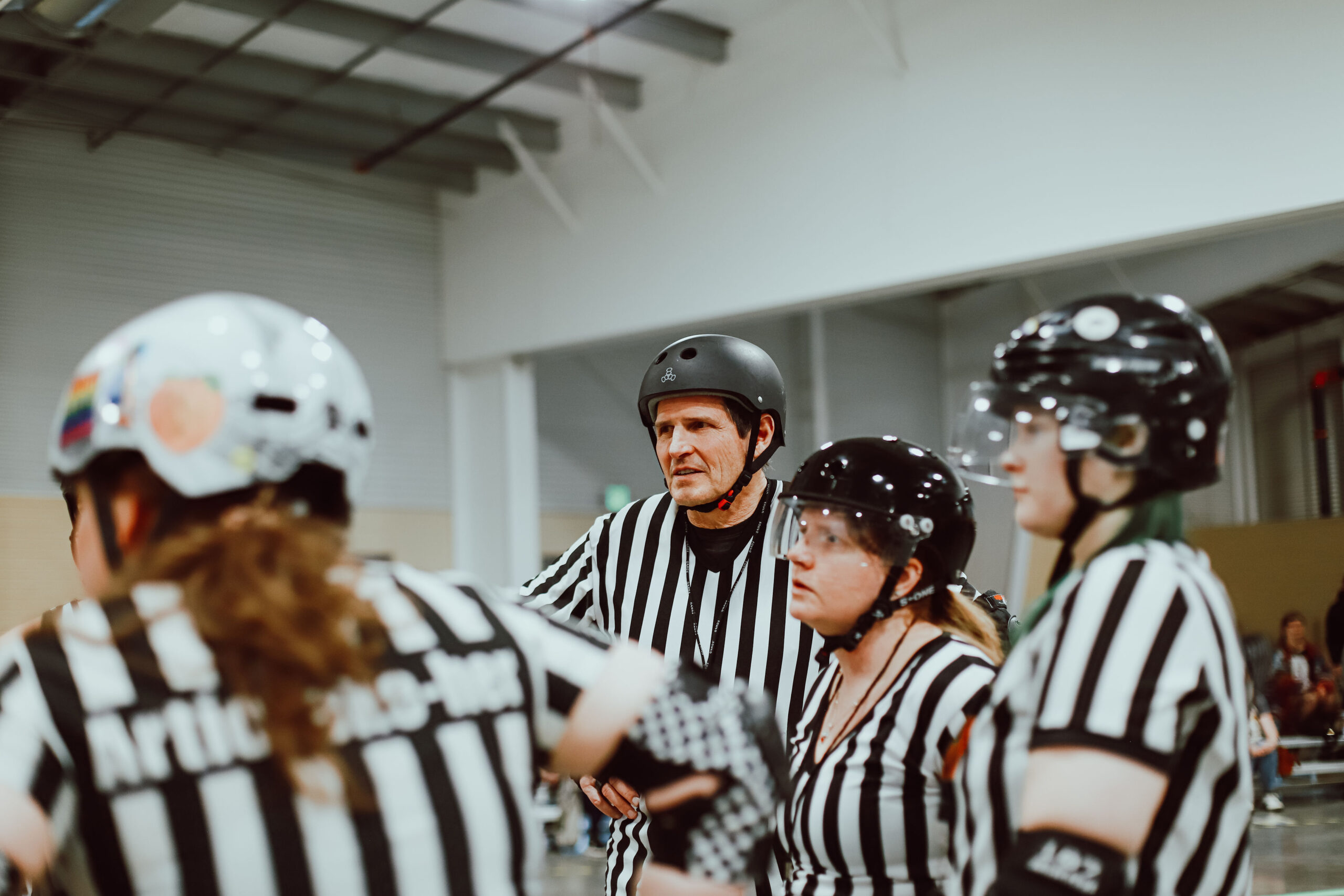
Volunteers are the heartbeat of any roller derby league with so many responsibilities on the sidelines. Referees especially are the ones that keep our game fun, fair and safe. But often, the prospect of becoming a volunteer for FCRD can feel daunting – or be something you’ve never heard of before.
I sat down with our Head NSO (that stands for Non-Skating Official), Blunt Force, to understand a little more about what it’s like to volunteer, how to get involved, and considerations for why you might want to volunteer. Here’s what they told me about volunteering
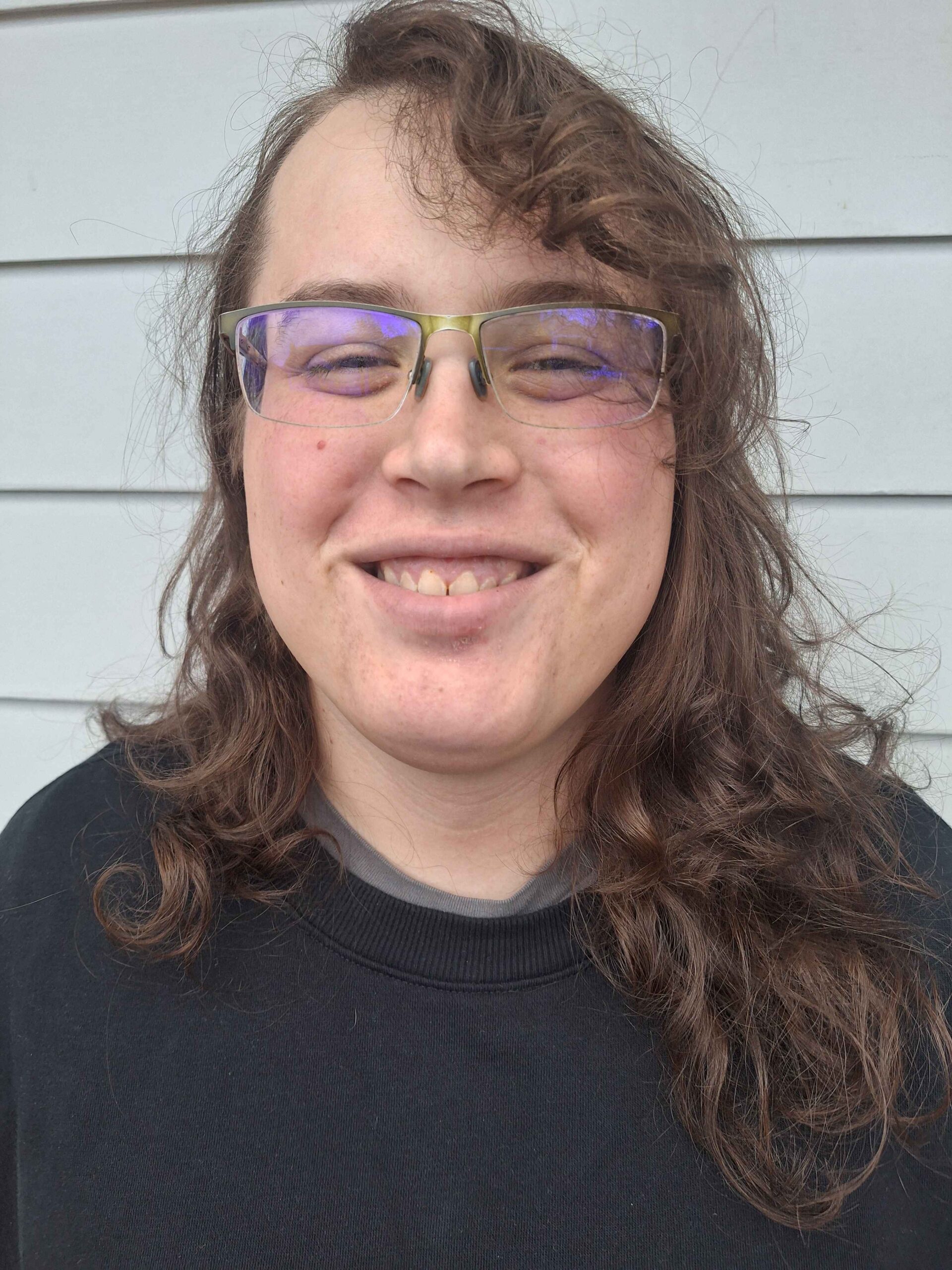
How did you get involved as a volunteer NSO for the league?
“I reached out to the officials email on the website and got told to come to a game and come shadow and see if I thought it was interesting. It was a little intimidating, because I was walking into a room full of strangers and hadn’t ever actually been to a derby bout before so I wasn’t sure what to expect. But if you show up and go with the flow, people will be nice and understanding so you can always ask a question if you’re confused.”
What do you want people to know before they become volunteers?
“Be prepared for everything to be way more chaotic than you expected but in a good way. It’s a lot of fun. Once you get a hang of things it’s not as hard as it might seem at first. There’s a flow to everything even if it feels chaotic and unsteady at times.”
What’s it like working with the other officials and players?
“Derby folks are chill and all the officials recognize we’re just people doing our best. If you see that in them and do as they expect, they’ll do whatever they can to help you.”
What’s your favorite part of being an NSO?
“I like talking about some of the weird niche things that don’t come up very often but will inevitably come up during someone’s first time when they don’t know what’s happening. My first time ever being Penalty Box Manager (PBM) was the first time I ever saw a player get ejected from a game for fouling too much. I also like to watch derby for free once a week. As an NSO you get to go to scrimmages because it’s practice for us too and that’s pretty cool. I don’t really have the aggression to be a player or the skating skills to be a SO, so it’s nice that there’s something that I can do.”
What’s the best part about having new volunteers?
“Not having to do all the penalty timing and scorekeeping by myself at scrimmage saves me work.”
Where can new volunteers find you when they come for the first time and are looking to learn?
“They can look at the Penalty Box and I’ll probably be standing there.”